This guide was written by the Rinse team with fabric care expert Dan Eisen.
Introduction
When it comes to laundry, few things are as horrifying as a grease stain. The moment you see an oil stain, you know it will need a ton of elbow grease and multiple cycles in the washing machine to come off.
Fortunately, there are a few ways to get rid of grease stains from clothes effectively without having to purchase a commercial stain remover.
Your pantry and kitchen are filled with all kinds of ingredients that can help lift the grease off your clothes. In this guide, we'll discuss some methods to remove oily patches, be it cooking grease, motor oil, or even machine grease.

Why Is It So Difficult to Get Grease Out Of Clothes?
You might be wondering why grease stains are so challenging to remove. The reason is that grease doesn't mix with water, which means it will not dissolve in your liquid laundry detergent without a bit of help.
Time for a quick chemistry lesson. Grease is a lipid, which means it is non-polar; meanwhile, water is polar. The difference in polarity means they don't mix well.
As a result, grease clings to your garment instead of being washed away like protein-based stains. This means you need to use ingredients with a higher affinity for grease than water.
Grease also tends to seep into the fibers of your clothing, which makes getting it out even harder. Worry not, though – we'll teach you how to get grease stains out of clothes.
Fabric care expert Dan Eisen adds a distinction that explains why some grease is far worse than others. In the trade, oils are either non-oxidizing, like mineral oil, motor oil, and other petroleum products, or oxidizing, like the animal and vegetable oils in cooking. Petroleum oils do not really dry, so they stay soluble and are usually easier to lift. The cooking oils are the stubborn ones. They take on oxygen from the air and set further with age and heat, which is why running a greasy garment through a hot wash or dryer before the oil is out can lock the stain in for good. One more tell: an oil stain has no texture and slowly creeps into a cross or T shape along the weave, which is how you can tell it apart from a sweat or coffee mark.
8 Best Methods To Get Grease Out Of Clothes
Most of the methods we tell you below won't require any specialized skill or materials. You'll most likely have these items at home. Let's get right into the methods.
Method 1: Use Dish Soap
We take off with the most ubiquitous material you probably have at home – dish soap. If you've never used it on clothes before, that's not a problem. It's safe for your garments, just as it is for your pots and pans.
The reason dish soap works so well is that it's designed to break down all sorts of oils. That's why it cuts through grease on your dishes and, in this case, clothing.
Here's how to use it:
-
Put your garment on a piece of cardboard or a towel.
-
Cover the stain with a little dish soap.
-
Gently rub the detergent into the stain with your fingers or a toothbrush.
-
Let it sit for 5 to 10 minutes.
-
Rinse the area thoroughly with cold water.
-
If the stain is gone, wash your garment as usual.
-
If the stain is still there, repeat the process or move on to another method.
Time Taken: The entire process should take no more than 15 minutes, depending on how long you let the soap sit.
Eisen points to the same principle from the professional side. A hand-dishwashing soap like Ivory works for the reason above, and a nonionic, citrus-based detergent such as Simple Green cuts oil even more aggressively if you have it.
Method 2: Use Aloe Vera Gel
You're probably surprised to see a skin product on this list. But aloe vera gel works wonders for getting grease out of clothes. It's gentle and non-toxic, so it won't harm your clothes or skin.
Aloe vera contains components of proteins called amino acids. These elements break down the oil in grease, making it easy to remove.
Here's how to use it:
-
Fill the sink or a tub with hot water and soak your garment in it.
-
Take the clothing item out and apply a generous amount of aloe vera gel on the stain.
-
Rub it into the stain by using a toothbrush in a circular motion.
-
Wash the garment as usual.
If you use this method, you should hang or air-dry your garment.
Time Taken: Expect to spend 10-15 minutes on this method.

Method 3: Try Baking Soda
You can use baking soda to remove an oil stain, provided the garment hasn't gone through the washer yet.
Baking soda works best on stains that haven't set yet. It absorbs the oil so the stain does not fully set into your garment's fibers.
Here's how you can use baking soda:
-
Put your garment on a flat surface like a towel.
-
Sprinkle a generous amount of baking soda on the stain.
-
Let it sit for 10-15 minutes. You'll notice a change in the color of the baking soda as it soaks the grease.
-
Once it has dried, scrape the baking soda off your garment.
- Wash your garment with hot water.
If you don't see a color change, repeat the process until you see the stain fade away.
Time Taken: The method takes about 20 to 30 minutes. It may take longer in the case of multiple applications.

Method 4: Make a Cornstarch Paste
Cornstarch isn't just for cooking; it also removes stains, especially those left behind by cooking oil. It also doesn't get stuck to your garment and is a wonderful cleaner for delicate fabrics like suede.
To use cornstarch:
-
Make a thick paste by mixing water and cornstarch.
-
Spread this paste on the stain. Make sure you cover it completely.
-
Leave the cornstarch paste on the garment, waiting for it to dry.
-
Remove excess paste from the garment by brushing it off gently.
-
Wash your garment as usual.
Time Taken: The method can take up to half an hour as the paste needs to dry.
Method 5: Use Chalk
Who knew that good old chalk could remove oil stains? Chalk has absorbent properties that can pull out the oil from your garment.
Here's how you can use chalk:
-
Rub the chalk directly onto the stain, covering it completely.
-
Let it sit overnight.
-
Brush off the excess.
-
Wash your garment in the warmest setting possible using your regular laundry detergent.
Time Taken: The overnight method may take up to 8-10 hours. However, if you're in a rush, you can leave the chalk on for at least 30 minutes before washing the garment.

Method 6: Apply Hairspray
If other cleaners aren't available, give hairspray a shot. The chemicals in hairspray have properties that can lift oil stains.
To use hairspray:
-
Put a towel under the stain so that it does not spread.
-
Spray hairspray on the stain to dampen it completely.
-
Let it sit for about 30 minutes.
-
Wash as usual.
Time Taken: 30 minutes at most.
Method 7: Use Lestoil
For those of you who may not be familiar with Lestoil, it is a heavy-duty cleaner that is commonly used for removing grease and tar stains from the floors. Just a heads up: don't use it on delicate fabrics. Instead, limit this method to durable fabrics.
It's best to do a spot test before using Lestoil on your greasy garment.
-
Use a small brush or your finger to apply the cleaner directly onto the stain.
-
Wash as you normally would.
-
Air dry your clothes.
Time Taken: It takes about 5 minutes.
Method 8: Cut Through It With Ammonia
Eisen calls a little ammonia mixed with water and detergent one of the most effective ways to pre-spot a grimy collar before washing. Ammonia is an alkali that cuts grease well, and it needs more care than anything else here, so read the cautions first.
Here's how to use it:
- Mix a little household ammonia with warm water and a mild detergent.
- Work it into the greasy area, agitating gently with the edge of a spoon rather than scrubbing hard.
- Let it sit for a few minutes, then rinse the area with water.
- If the color shifts at all, rinse right away and dab the spot with a little white distilled vinegar.
- Wash the garment as usual.
Cautions: Test on an unexposed area first, since ammonia can bleed colors, especially on wool and silk. Work in a ventilated space, as the fumes are irritating. Never mix ammonia with chlorine bleach, since the combination gives off dangerous fumes.
Time Taken: About 10 minutes.

Want To Keep Your Clothes Grease-Free?
Whether it is cooking oil on a favorite dress or grease from a day in the shop, these methods bring most garments back. Some stains, though, are set, oxidized, or on a fabric you would rather not experiment on.
That is where Rinse comes in. We handle all kinds of stains across all kinds of fabrics.
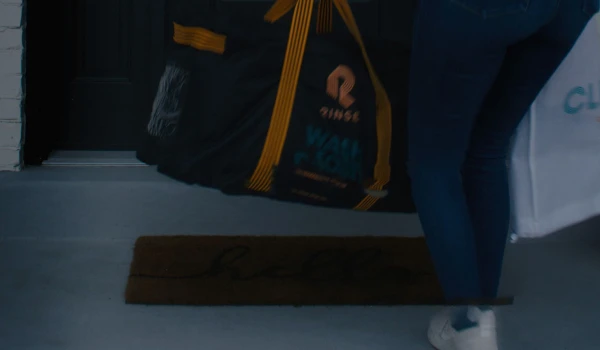
A Rinse Valet picks your clothes up from your door, we clean them using eco-friendly products, and we deliver them back. Book a pickup by text or on our website. Since we also offer dry cleaning, a single stubborn oil stain on a dress, or on a suit you need for something that matters, is handled with the right method rather than guessed at.
Contact us at Rinse today to see our skill in action.
Image Source: The Clorox Company, Church & Dwight Co., Inc.
About the expert: Dan Eisen
Dan Eisen is a fabric care expert with more than 35 years in garment analysis and stain removal. He founded the International Independent Garment Analysis Service and served as Chief Garment Analyst for the National Cleaners Association from 1968 to 2001.
He co-founded the East Coast School of Dry Cleaning and was Assistant Director of the New York School of Dry Cleaning. He has lectured at the Fashion Institute of Technology and Marymount College, and has consulted on textile care for the Metropolitan Museum of Art, the Brooklyn Museum, and the Elliott Museum in Florida.
His work has been featured in The New York Times, The Wall Street Journal, and Newsday, and he has appeared on David Letterman and CNN. He has cared for garments belonging to public figures including Barbra Streisand, Glenn Close, and Colonel Harland Sanders, writes regularly for National Clothesline and Korean Monthly, holds two patents, and continues to consult on commercial, industrial, insurance, and legal cases worldwide.